
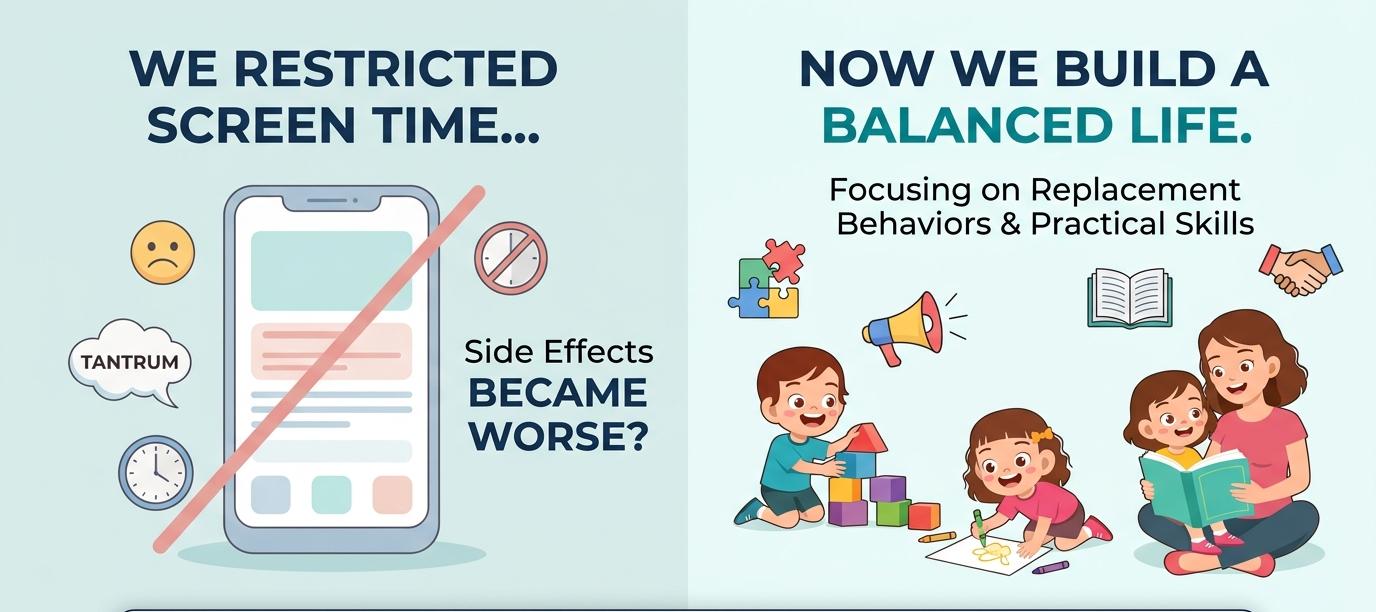
Reducing Screen Time for Children Without the Meltdowns
We have all read articles telling us that reducing screen time for children will sharpen their focus, eliminate tantrums, and magically improve their behavior. Just unplug the tablet, turn off the television, and wait for peace to return—at least, that is how simple it can sound.
I will be the first to admit it: I believed it.
I sat my child down, set clear boundaries, and prepared for a calmer, more connected, screen-free home.



Within forty-eight hours, however, our house felt like a pressure cooker about to blow. There was irritability, constant pacing, and one meltdown after another. I began to wonder whether I had made a terrible mistake.
If you have experienced that same sinking feeling, please remember this: you are not failing. You have simply discovered that removing a screen is only half the process.
Why Reducing Screen Time for Children Can Be Difficult
When we take away a screen, we may think we are only removing a toy or a source of entertainment. For a child, however, that device may be doing much more. Screen time may provide:
- Sensory input
- A predictable and familiar routine
- A way to escape overwhelming feelings or situations
- A reliable source of enjoyment and reinforcement
When we remove the device without providing support or an alternative, we are not merely removing a distraction. We may also be taking away one of the child’s familiar ways of coping or regulating.
It is understandable that some children struggle with this change. We have removed an activity they rely on, yet they may not know what to do with the unstructured time that remains.
Changing the Question About Screen Time
For months, I kept asking myself, “How do I make my child stop looking at the screen?”
Things began to improve only when I changed the question:
“What is my child going to do with that time instead?”
We cannot expect children to suddenly master independent play, tolerate boredom, or regulate difficult emotions if they have not yet learned those skills. Removing a preferred activity does not automatically teach them what to do next.
It is a little like taking away a child’s bicycle before they have learned to walk and then expecting them to sprint.
A Kinder Approach to Reducing Screen Time
The principles of Applied Behavior Analysis (ABA) helped me reframe my parenting approach. Instead of concentrating only on restriction, I began focusing on replacement, preparation, and teaching. Here is how we began making the change with less distress.
1. Make the Transition Predictable
Instead of ending screen time without warning, we introduced visual timers and advance reminders. This helped my child understand when screen time would finish and what would happen next.
A predictable ending made the transition feel less sudden. Depending on your child’s needs, you might use a visual schedule, a countdown, a “first–then” statement, or a consistent transition routine.
2. Offer a Meaningful Replacement Activity
We did not simply switch off the tablet and leave an empty space. We introduced another activity immediately—playing music, completing a puzzle, going outside, moving our bodies, or doing something together.
The important lesson for me was that offline time had to be genuinely interesting and manageable for my child. A replacement activity is more likely to work when it meets a similar need or offers something the child already enjoys.
3. Teach Independent Play and Tolerance for Boredom
We practiced being bored. It sounds simple, but tolerating unstructured time is a skill—and skills need to be taught.
We began with brief, achievable periods of independent play and gradually increased the duration. I offered support at first, noticed and encouraged small successes, and avoided expecting long stretches of independent play immediately.
4. Model a Healthy Screen-Time Balance
I also had to be honest with myself. If I was constantly scrolling while asking my child to play without a device, the message became confusing.
We introduced family quiet time, during which everyone put their devices away. This made reducing screen time feel less like a punishment directed at one child and more like a family habit we were building together.
“Focus on Connection, Not Perfection”



The goal is not to demonize technology or create a perfectly screen-free child. We live in a digital world, and screens can be useful tools. The goal is to help our children build lives that are engaging, connected, and meaningful—so that a screen becomes one option in their day rather than their only reliable source of comfort or enjoyment.
If you are currently struggling with reducing screen time for children, take a breath. You do not have to make every change at once, and you do not need to be perfect.
Start small. Choose one transition or one replacement skill to work on. Observe what the screen may be providing for your child, and look for another appropriate way to meet that need.
Most importantly, be a partner in your child’s learning. Give your child—and yourself—a little grace.
What Has Your Screen-Time Experience Been?
Have you ever tried to reset your child’s screen habits? What was the biggest hurdle you faced, and what helped your family navigate it?
Share your experience in the comments below. Your story may help another parent feel less alone.
#ParentingJourney #ScreenTimeBalance #ChildDevelopment #PositiveParenting #MindfulParenting #BehaviorSupport #AppliedBehaviorAnalysis #ABA #AutismSupport #ParentTraining #GrowingTogether
#Reducing Screen time for Children